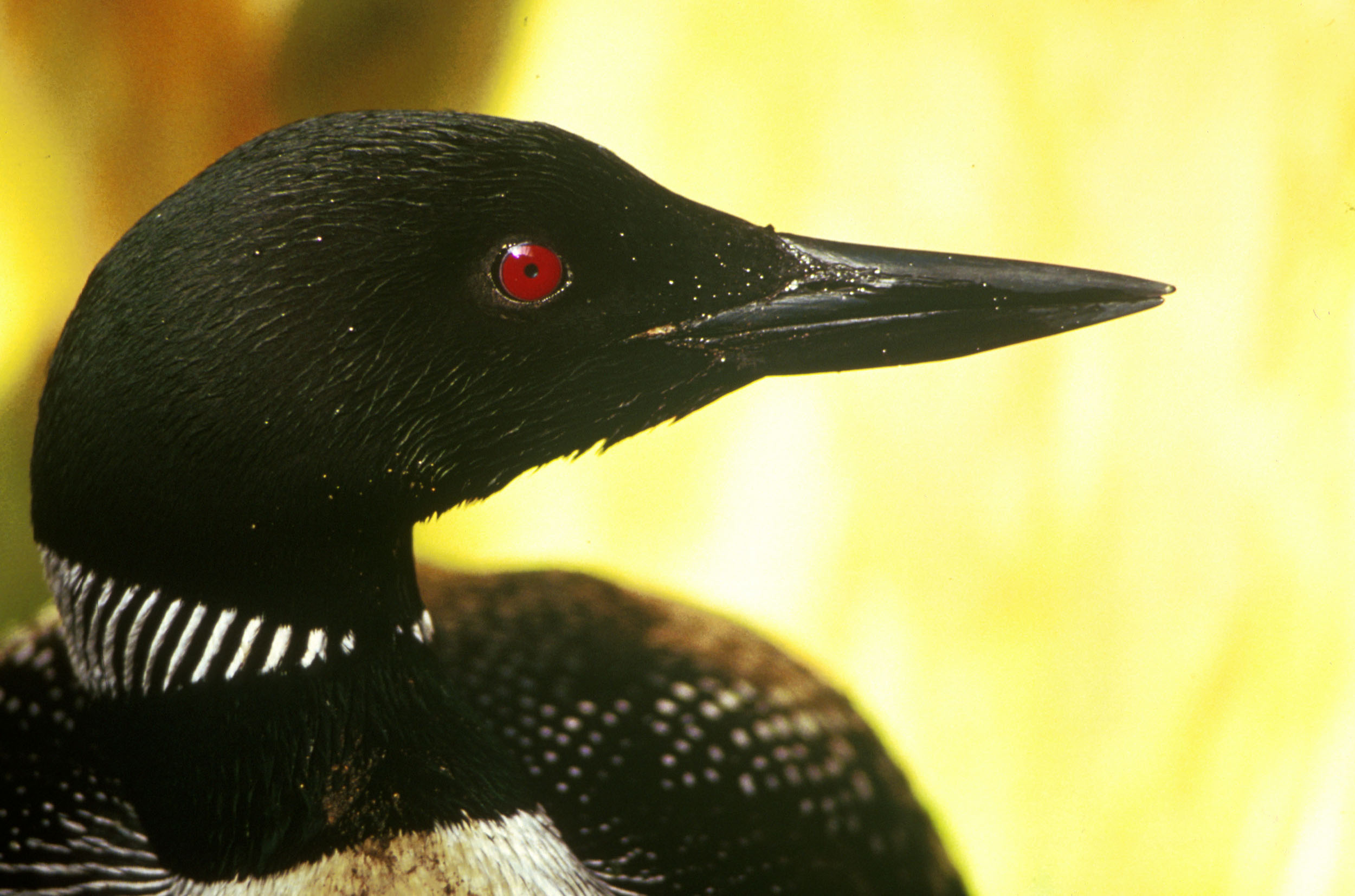
The Common Loon (Gavia immer) is among the most widely recognized breeding birds in Canada, and its presence on a lake is often treated as an indicator of ecosystem health. That association is not unearned — loons are highly sensitive to a specific set of lake conditions, and their occupancy patterns across the Canadian Shield reflect those requirements in measurable ways. Understanding what those conditions are makes both birdwatching and broader conservation discussions considerably more grounded.
Lake Size and Depth
Loons are diving birds that pursue fish underwater, typically at depths between two and ten metres. This means they are almost exclusively associated with lakes deep enough to support clear-water fish populations and provide enough runway length for takeoff. A Common Loon requires roughly 23 metres of open water to become airborne, which places a practical lower limit on lake size. On the Shield, productive loon lakes tend to exceed 40 hectares in surface area, though birds do nest on smaller waterbodies that open into larger interconnected systems.
Water clarity matters as much as depth. In turbid or heavily stained lakes, underwater visibility drops, reducing foraging efficiency. Where dissolved organic carbon is high — as in many boreal lakes with extensive peat catchments — loons are present at lower densities. The clearest and most productive loon lakes in Ontario and Quebec share shallow littoral zones over hard substrate with deeper pelagic areas where Yellow Perch and Smallmouth Bass are abundant.
Nest Site Selection
Loon nests are placed directly at the water's edge, typically on vegetated points, islands, or floating bog mats. The proximity to water is non-negotiable: loons move clumsily on land and cannot approach a nest from a distance. Islands are strongly preferred over mainland shores because mammalian predator pressure — from raccoons, mink, and foxes — is lower. On lakes without islands, floating bog edges anchored by sedge root mats serve as nest platforms that rise and fall with water levels, reducing flood risk.
Nest placement is also affected by human activity. Motorboat wakes that wash over a nest during the incubation period are a documented cause of egg abandonment on heavily trafficked cottage lakes. In Ontario's Muskoka and Haliburton regions, where cottage density is highest, loon productivity measured as chicks per territorial pair is consistently below that in less-developed lake districts to the north.

Territorial Behaviour and Lake Carrying Capacity
On most Shield lakes, a single pair defends the entire waterbody through a combination of vocalizations and physical confrontation with intruders. On larger lakes — those exceeding roughly 200 hectares — multiple pairs can coexist by partitioning the lake into sections separated by bays or islands. The tremolo call, commonly known as the "laughing" call, functions primarily as an alarm or agitation signal rather than a territory advertisement; the wail and yodel calls carry the territorial message over distances of several kilometres.
Territory fidelity is strong. Banded individuals studied in northern Ontario returned to the same lake in consecutive years at rates exceeding 80 percent, and pair bonds that produce successful clutches tend to remain stable across multiple seasons. Non-breeding floaters — birds that have not yet established territories — are present on most large lakes and opportunistically move into vacancies when a territorial bird disappears.
Foraging Ecology and Prey Species
Yellow Perch and Smallmouth Bass make up the bulk of the loon's diet on most Shield lakes, supplemented by crayfish and, in northern systems, Cisco and Lake Whitefish. Dives typically last between 45 seconds and one minute, reaching depths of up to 60 metres in exceptional cases, though most foraging occurs in the top 10 metres where light levels support adequate prey detection.
Aquatic food chains in Shield lakes have a direct influence on loon productivity. Lakes that have undergone acidification — historically concentrated in areas downwind of smelter complexes in Sudbury and the Rouyn-Noranda region — often show collapsed fish communities, particularly among acid-sensitive species like Yellow Perch fry. Recovery has occurred in many Ontario lakes following SO₂ emission reductions since the 1990s, and loon populations in previously affected townships have partially rebounded in parallel with fish community recovery.
Mercury and Contaminant Exposure
Loons bioaccumulate methylmercury through their fish prey, and blood mercury levels vary significantly across the Shield. In Ontario's most productive loon research, conducted through Birds Canada and the Canadian Wildlife Service, average blood mercury concentrations in breeding adults have remained below threshold levels shown to impair reproduction in laboratory settings, but individual variation is high. Birds feeding at lower trophic levels in clear-water systems carry lower burdens than those on eutrophied lakes where methylmercury production is elevated by bacterial activity in sediments.
For observers, mercury-impaired loons may show abnormal behaviours — reduced diving frequency, disorientation, or unusual posturing — that are detectable in the field but require context to interpret correctly. These observations, submitted through eBird or directly to Birds Canada, contribute to ongoing monitoring programs.
Autumn Departure and Wintering Habitat
Adult loons depart breeding lakes as freeze-up approaches, typically in late October to early November. They move to coastal marine wintering areas — the Atlantic seaboard, the Gulf of Mexico, and the Pacific coast from British Columbia south to Baja California — where they forage in saltwater on marine fish and invertebrates. Juveniles of the year linger longer than adults, often remaining on lakes after adults have departed, and may remain on coastal bays through their first two or three winters before returning inland to prospect for territories.
The transition from fresh to saltwater involves physiological changes in salt gland activity and plumage, and birds spend the first weeks of saltwater residency in the characteristic gray-brown non-breeding plumage. The shift back to the striking black-and-white breeding pattern begins in late winter, and most adults arrive back on Shield lakes in full or near-full breeding plumage in late April or early May, often within days of ice-out.